The Work That Follows You
As threats to journalism grow, I found myself teaching from afar—and understanding why the work still matters.

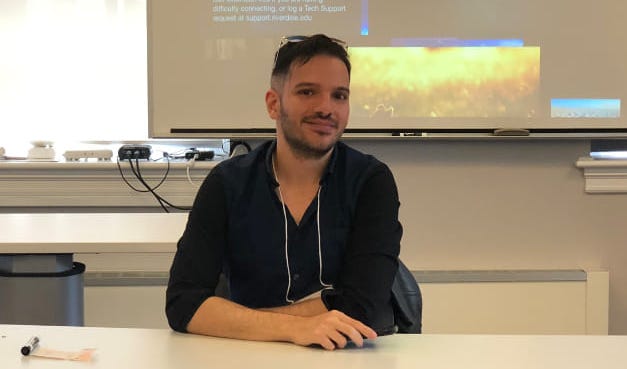
In the spring of 2019, my friend Andrew Abate, then a teacher and administrator at the Riverdale Country School, invited me to speak to some of his students about journalism. I had just turned 28, and my organization, the Association of Foreign Press Correspondents in the United States (AFPC-USA), was freshly formed. I was the youngest member of the founding board and its General Secretary. It felt like the crowning achievement of my life—a fire lit under me, the sense that I’d stumbled into something real, a direction at last, after watching the first Trump administration denigrate the free press day after day.
I remember speaking about our mandate. My eyes still twinkle when I think of our website, which notes that AFPC-USA is “dedicated to advancing the mission of supporting international journalists and strengthening the global exchange of information.” I was brimming then with passion and the full force of my ideals. I spoke about how I got my first professional break in the content and news division for George Takei, the Star Trek actor, and I remember chuckling at the realization that Gen Z might not fully grasp who he was or how profoundly his presence had shaped the early social media ecosystem. When I joked that I’d never actually watched a full episode of Star Trek, they admitted they hadn’t either—which, for what it’s worth, felt oddly reassuring.
What the students didn’t realize, at least at first, was how nervous I was. Since that day, I’ve racked up a fair amount of achievements. For instance, I edited Being a Correspondent, the first new journalism textbook to be published in the U.S. in years, and even defended my friend and colleague, Thanos Dimadis, in a closely-watched press freedom case in Greece that attracted the attention of the State Department. I’ve devised educational programs bridging the gap between climate change and journalism, produced a podcast and interviewed journalists about topics ranging from financial markets to artificial intelligence to disinformation, and written and disseminated statements and press releases in partnership with organizations as respected as Reporters Without Borders (RSF) and the Freedom of the Press Foundation (FPF). I’ve even met teenage Ukrainian refugees and listened to their stories about life in Russian indoctrination camps, and edited the work of journalists who’ve gone to the front lines to report on a war that continues to shake the foundations of the Western world.
All of these things would have seemed like a dream even then, for I could not appreciate, at least at that moment, what it meant to sit as the youngest member of the board of what would become the nation’s leading press freedom organization for foreign correspondents. What did I know to share with students? I truly felt like I didn’t know much of anything.
But I care deeply about freedom of information, press freedom, democracy, and upholding human rights and shared values. I’ve always cared. I approached those students with the same passion I’ve always had, and I do believe that made all the difference—they were bright, inquisitive, a dream to speak to.
Funnily enough, one commented to me, “I have a lot of anxiety about starting my career and life in general. That goes away, right?” I smiled. “It doesn’t,” I said, to her shocked horror. “You learn to move through it. Believe it or not, I still wonder what in the world I’m even doing up here right now.” Andrew took a picture of me that day—I was happy, yes, but not yet self-assured. I still had so much to work out.
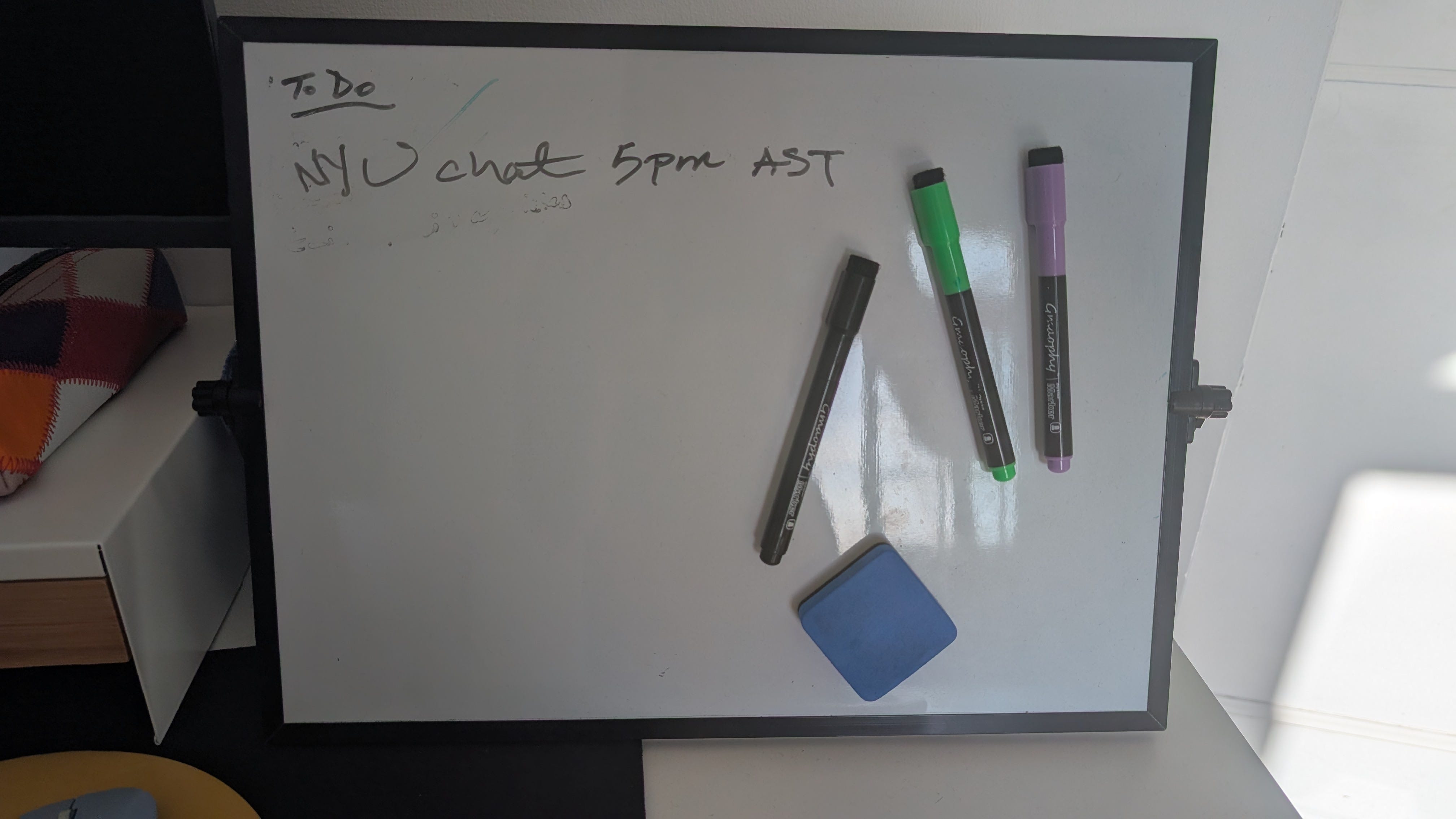
Earlier this month, nearly seven years after that fateful afternoon, I had the great pleasure—far more assured, far more experienced, yet nonetheless shaped by the political realities of the United States—of speaking at New York University to the class of communications professor Kathryn Metcalfe, who currently sits on the board of AFPC-USA and brings experience across communications, reputation management, and crisis and issues strategy. I no longer carry the fears of my 28-year-old self. In fact, at one point I spoke with her students about imposter syndrome—something they, as early-career communications professionals, said they deeply related to. It felt important to confront that fear of not being enough, of never doing enough, as I addressed them not in person but over Zoom, from thousands of miles away—in exile from my country, yet more committed than ever to stressing the value of a free and independent press at a time when the costs for journalists are higher than ever and the threats increasingly resemble those Americans once assumed happened only in far-off nations.
At one moment in my talk, I heard myself ask a question that felt less rhetorical than existential: “If journalism is so unimportant, why is the government working so hard to silence it?”
One day later, former CNN host Don Lemon pleaded not guilty to charges of conspiring to violate civil rights and obstructing religious freedom, accusations tied to his reporting on a protest last month at a church in Minnesota over federal immigration raids conducted by ICE. Separately, reporters at The New York Times revealed that the Department of Homeland Security (DHS) had begun widening its search for Americans critical of ICE, pressing technology companies for the names, emails, phone numbers, and other identifying traces behind social media accounts that monitor or challenge the agency’s conduct. I also recently spoke with Regina McCombs—a senior lecturer and fellow in visual communication and photojournalism at the University of Minnesota—for an upcoming podcast episode examining the kinds of safety training her students received, instruction typically reserved for reporters sent into war zones or other dangerous assignments. The fact that such preparation was deemed necessary says a great deal about the climate in Minneapolis, where immigration raids and federal enforcement operations have left residents fearful, and where two Americans were killed in incidents involving federal agents.
Looking back now, I understand that my presence in that virtual room carried its own quiet defiance. The atmosphere beyond the screen was one of tightening pressure, a country testing how far it could stretch the boundaries of speech before they snapped. And there they were—students, many with journalism in their bones—not shouting, not marching, but doing something almost subversively ordinary: asking questions, learning, imagining how truth might still be defended. In another era, this would have been called education. In this one, it risks being called complicity with those power has decided to name “enemies of the people.”
AFPC-USA is only one among many organizations in the U.S. devoted to protecting free expression, yet like so many of them it has faced sustained pressure in recent years. Being invited to speak about this work felt like a privilege precisely because the stakes have grown so high.
The Association’s involvement as a group grew directly out of a mutual belief in the value of international engagement and cross-border journalism. We also understand deeply the extent to which foreign journalists must wield their global perspective as they contend with issues of access and opportunity not faced by their native-born contemporaries. Groups like ours matter now more than ever. The impulse of power is often to exhaust, to intimidate, to make the press hesitate before it fulfills its mandate. The answer cannot be retreat. It must be persistence—speaking clearly, publicly, and without apology.
Addressing those students reminded me why we believed building the organization mattered in the first place. Beyond serving as a network and a classroom for journalists, we understood that the profession needed something stronger: a collective voice capable of carrying weight. That urgency was most visible at the beginning, when our focus rested first and foremost on New York, before the years carried us outward—toward Washington, D.C., toward Los Angeles—and toward the realization that solidarity, once formed, rarely stays confined to one place.
One question I was asked—one I appreciated—was why I’m still with the Association after all these years. I said that I remain deeply grateful for my friends and colleagues, especially those of us who have been there since day one. I said, too, that this partnership feels more valuable than ever now that I live abroad but continue supporting the work from here. I must. I must. I must—knowing the risks.
I spoke plainly about the fact that, from the very beginning, I understood that working for a press freedom organization meant accepting the real possibility that our work could come under threat, that even my livelihood might be at stake. I do it anyway. We do it anyway.
When I said last year that I would have to leave the country for my own safety and well-being, I was met with clear and unequivocal support. And I know now that stepping back would not only diminish the work—it would diminish me.